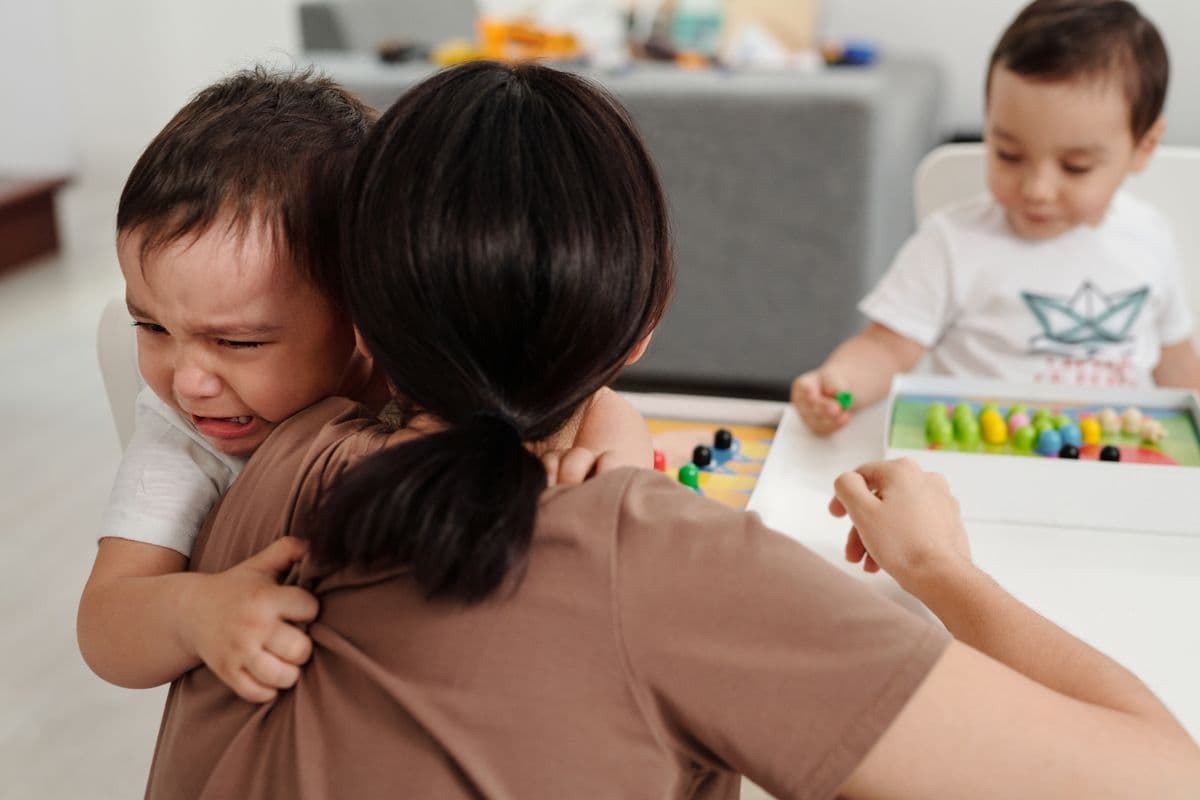
If your toddler's "please" comes out as a long, rising whine — and every grocery aisle feels like a soundtrack on loop — you are not doing anything wrong. Whining is one of the most common behaviors of early childhood, and for most kids it is a skill gap, not a character problem.
Below is a calm, evidence-informed look at why toddlers whine, what it is communicating, and what actually helps — without shame, bribery, or pretending you can't hear it.
What toddler whining actually is
Whining sits in an awkward middle ground: louder and more intense than a normal request, but not quite a full tantrum. Developmentally, it often shows up when a child:
- Wants something (attention, help, a snack, a different outcome) and does not yet have the words, patience, or emotional regulation to ask calmly
- Is overloaded — hungry, tired, overstimulated, or mid-transition
- Has learned (usually without anyone intending it) that a certain voice gets a faster adult response than a quiet one
In short: whining is usually a communication strategy under stress, not a small person plotting to annoy you.
Why toddlers whine (the real reasons)
1. Their brain is still under construction
Between roughly ages 2 and 5, language, impulse control, and emotional regulation are all in heavy development. A toddler can want a cracker, feel the disappointment of "not right now," and struggle to hold both feelings and words at the same time. The high-pitched, drawn-out voice is often what comes out when the system is maxed.
Research on early self-regulation shows these skills grow through practice and co-regulation with caregivers — not through lectures. Your calm presence is part of the curriculum.
2. Need + limited skill = louder cue
Most whining spikes map to familiar basics:
- Hunger or thirst (blood sugar drops are real for little bodies)
- Fatigue (late nap, short night, big outings)
- Transitions (leaving the park, turning off a show, ending play)
- Feeling unheard or disconnected from you
- Wanting connection, not only the thing they're asking for
When you track patterns for a week — time of day, what happened just before — the "out of nowhere" whine usually stops looking random.
3. It works (sometimes)
If a whine is the only bid that consistently gets a response, the brain files that under "effective." You do not have to answer every ask the second it starts to rise — but you also do not have to ignore a child in distress. The middle path is: connect, coach the words, hold the boundary.
4. Emotions outrun language
A two-year-old may understand far more than they can say. Frustration, envy, boredom, and excitement all press for an outlet. Whining is one outlet. Teaching a short script ("I want help, please") and practicing it in calm moments gives them a better one.
Whining vs. tantrums vs. "being difficult"
Useful distinctions when you're in the thick of it:
- Whining — still communicative; the child is usually still reachable with connection and a redo
- Tantrum / meltdown — the nervous system has tipped over; less about negotiating, more about safety, presence, and waiting for the wave to pass
- Testing a boundary — often calmer and more deliberate ("What if I say it louder?") — still not malice; it's learning rules
Same child can cycle through all three in one afternoon. The response scales to the moment, not their permanent "type."
What usually does not help
- Shame ("Stop being so annoying") — increases stress and can lock the whine voice in place
- Long lectures mid-whine — language processing drops when kids (and adults) are flooded
- Giving in only after the whine escalates — accidentally trains "louder + longer = yes"
- Total stonewalling every time — can feel like abandonment when the bid was actually "I need you"
None of this makes you a bad parent if you've done some of the above on hard days. It just means a different pattern works better over time.
A calmer response you can use today
When the whine-voice shows up, try this short loop (it gets easier with reps):
- Regulate you first. One breath. Soft face. You are the thermostat.
- Connect briefly. Kneel or sit nearby. "I hear you. You really want that juice."
- Name the words you want. "Try it with your strong voice: 'Juice, please.'"
- Invite a redo when they are able. Celebrate the attempt, even if it's quiet or clumsy.
- Hold the actual boundary. If the answer is no or not yet, stay kind and firm: "I won't give juice right before dinner. You can have water, or we can wait."
If they tip into a full meltdown, drop the coaching for a minute. Safety first, words later. After the storm, reconnect — that repair teaches more than a perfect first response.
Prevention that actually moves the needle
- Protect sleep and snacks around high-friction times
- Preview transitions ("Two more minutes at the park, then shoes")
- Build in one-on-one connection before you need compliance
- Practice polite asks when everyone is calm — not only in the grocery store
- Notice the calm request as enthusiastically as you notice the whine
For a full practice system — the 3-step method, a prevention checklist, a printable quick-reference card, and a two-week tracker — see The Whining-to-Words Toolkit. If meltdowns are the bigger fire right now, The Tantrum Toolkit pairs well.
When to check in with a professional
Most whining is ordinary and peaks in the preschool years. Consider reaching out to your pediatrician or an SLP/behavior specialist if:
- Language is markedly behind peers, or hearing is a concern
- Whining (or meltdowns) are extreme, daily, and not easing with consistent support
- There is regression after a period of progress, or new aggression that worries you
- Your gut says something else is going on — trust that and get a second set of eyes
Linnet resources are educational and evidence-informed. They are not a substitute for professional medical, developmental, or mental health advice.
FAQ
Why do toddlers whine so much?
Toddlers whine because wants, feelings, and limited language collide while self-control is still developing. Hunger, fatigue, transitions, and a desire for connection amplify it. It is usually a communication skill under construction, not defiance for its own sake.
At what age does whining start and stop?
Many families notice it intensify around age 2, when language and independence surge, and it often eases across ages 4–6 as vocabulary, regulation, and practiced scripts catch up. Every child differs; consistency from caregivers usually shortens the peak more than any single "trick."
Is whining normal or a sign of a problem?
Frequent whining in the toddler and early preschool years is extremely common and developmentally expected. It becomes worth a professional check-in if speech seems delayed, hearing is in question, behavior is extreme or dangerous, or your parental concern persists despite steady, calm support.
How should I respond when my toddler whines?
Stay calm, acknowledge the feeling or want, coach a short clear phrase, invite a redo, and keep the real boundary. Avoid shaming and avoid only giving in after the whine escalates. If they melt down fully, prioritize safety and presence and coach words after they regulate.
Does ignoring whining work?
Selective attention can help — do not jump for every rising tone while still staying warm and responsive to real needs. Total freeze-outs often backfire: kids escalate when connection is missing. Better: respond to the need, not the pitch, and reinforce the calmer ask.
How is whining different from a tantrum?
Whining is usually still a request you can coach; a tantrum or meltdown is a nervous-system override where little coaching lands until the intensity drops. Use words and redos for whines; use calm presence and time for big meltdowns, then reconnect.